
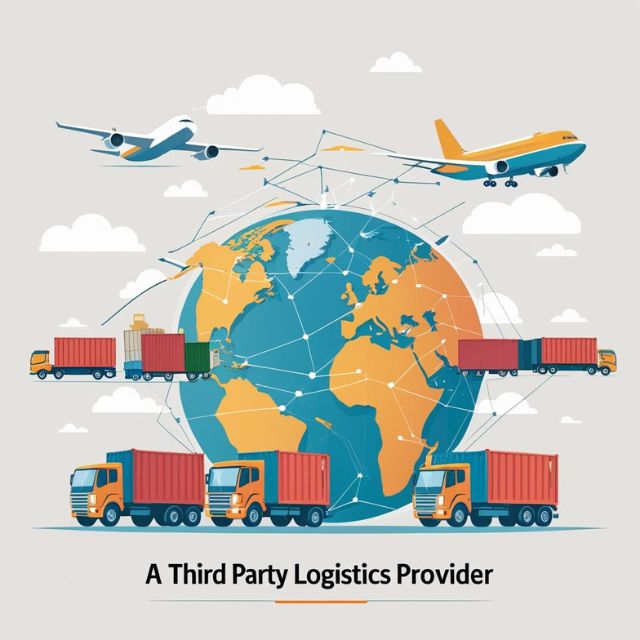
Learn how to choose a third-party logistics provider by evaluating technology, scalability, industry expertise, customer experience, flexibility, omnichannel capabilities, and performance.
As your business grows, so do the complexities of managing your supply chain. Handling inventory, shipping, returns, and customer expectations can become overwhelming, especially if logistics isn’t your core strength. That’s where third-party logistics providers, commonly known as 3PLs, come in.
But not all 3PLs are created equal. Choosing the right one requires careful consideration, especially when they’ll be handling a critical part of your business.
In this guide, we’ll walk through what a logistics provider is, what third-party logistics providers do, and most importantly, how to choose a logistics provider that meets your business goals.
What Is a Logistics Provider?
A logistics provider is a company that helps businesses plan, implement, and manage the movement of goods and materials from point A to point B.
This can include:
- Transportation
- Warehousing
- Inventory management
- Order fulfillment
- Delivery
- Returns coordination
In short, a logistics provider helps ensure your products get where they need to go safely, efficiently, and on time.
Logistics providers can be asset-based, meaning they own warehouses, fleets, and equipment, or non-asset-based, meaning they manage logistics using third-party resources.
Regardless of the model, a strong logistics provider brings structure and expertise to one of the most critical parts of your supply chain.
What Are Third Party Logistics Providers?
Third-party logistics providers are specialized logistics companies that offer outsourced logistics services. They work with businesses to take over all or part of the supply chain process.
This can include:
- Warehousing
- Inventory management
- Pick-and-pack services
- Shipping
- Returns processing
- Freight coordination
The key advantage of 3PLs is their ability to integrate into your operations without requiring you to manage or own physical logistics infrastructure. You gain access to their resources, technology, and expertise, helping you improve efficiency, reduce costs, and scale faster.
Some 3PLs focus on eCommerce, while others serve retail, industrial, or temperature-sensitive industries like food or pharmaceuticals. When deciding how to choose a logistics provider, understanding their niche expertise is essential.
How to Pick the Right 3PL Partner: 9 Smart Steps
Choosing the right 3PL provider isn’t just about checking boxes. It’s about building a long-term partnership that supports your growth.
Here’s how to evaluate the right logistics partner for your business.
1. Know What You Need and Ask the Right Questions
Before you start researching providers, define what your business really needs from a logistics partner.
Are you looking for a full-service fulfillment provider or only help with transportation? Do you need same-day shipping, climate-controlled storage, or international delivery?
Once you’re clear on your needs, ask potential 3PLs targeted questions such as:
- What industries do you serve most?
- Can you integrate with my eCommerce platform or ERP system?
- How do you handle order spikes or seasonal demand?
- What’s your typical order accuracy and delivery time?
The answers will help you identify whether their services and experience align with your goals.
2. Dive Into Their Technology Stack
Technology plays a huge role in today’s logistics. The right 3PL will use advanced systems to give you visibility, control, and real-time data throughout the supply chain.
Look for providers that use:
- Warehouse Management Systems, also known as WMS, for tracking inventory
- Transportation Management Systems, also known as TMS, for managing deliveries
- API integrations with eCommerce platforms such as Shopify, Magento, or other systems
- Dashboards that show real-time shipping status, order volumes, and returns
Technology should make your life easier, not more complicated. If their systems don’t integrate smoothly with yours, or if they rely heavily on manual processes, it may lead to delays and errors.
3. Make Sure They Can Grow With You
Scalability is one of the biggest reasons businesses turn to 3PLs. As your order volume increases, especially during peak seasons, you need a provider who can keep up.
Ask about their:
- Available warehouse space across different regions
- Flexibility to add new shipping options or storage types
- Experience with clients who have scaled rapidly
The best 3PLs have infrastructure and resources in place to support growth without compromising service quality.
4. Check Their Track Record
Your logistics provider will be responsible for a major part of your operations, so you want a partner with proven stability and experience.
Do some background research:
- How long have they been in business?
- What types of clients do they typically serve?
- Do they have case studies or client success stories?
- How do they handle disruptions like supply chain shortages or delivery delays?
A solid track record gives you confidence that they’ll be reliable when it matters most.
5. Match Their Strengths to Your Needs
Every 3PL has different specialties. Some are optimized for B2B freight and less-than-truckload shipping, while others excel at direct-to-consumer eCommerce fulfillment.
If your business ships fragile items, bulky goods, or temperature-sensitive products, the 3PL must have processes and infrastructure in place to handle that.
For example, businesses shipping perishable or sensitive products may need temperature-controlled freight, while companies moving high-volume shipments may require truckload transportation.
Don’t settle for a one-size-fits-all solution. Look for a logistics provider that understands the unique challenges of your industry and customer base.
6. Think About Customer Experience and Brand Alignment
Your 3PL doesn’t just ship products. They represent your brand. Late deliveries, damaged goods, or poor communication can harm your reputation.
A good logistics partner will help protect and enhance your customer experience.
Ask about:
- Order accuracy rates
- On-time delivery performance
- Branded packaging options
- Their process for handling customer complaints or returns
Your provider should feel like an extension of your brand, upholding the same standards you would.
7. Ask if They Offer Flexible or Custom Solutions
Every business has different needs, and the ability to customize logistics processes can make a big difference in efficiency and customer satisfaction.
A flexible 3PL should offer:
- Customizable workflows
- Specialized packaging
- Support for subscription boxes or bundled orders
- Returns handling that matches your brand policies
This customization helps align your logistics operations with your business model.
8. Look for Omnichannel Capabilities
If you sell across multiple platforms, such as your own website, Amazon, and physical retail, your logistics provider should be able to manage all channels smoothly.
A strong 3PL can support:
- E-commerce fulfillment
- Retail distribution to brick-and-mortar stores
- Marketplace integrations
- B2B and B2C order handling
This reduces complexity and gives your customers a consistent experience no matter where they shop.
9. Choose a Partner That Believes in Getting Better
Logistics is not a “set it and forget it” process. The best 3PLs are always looking to improve, reduce costs, and deliver a better experience.
Look for providers that:
- Offer regular performance reviews
- Share data and insights to help optimize your operations
- Continuously invest in technology and staff training
A culture of continuous improvement means your logistics partner will help drive your business forward, not just keep it running.
The Pros and Cons of Working With a 3PL
Working with a third-party logistics provider can unlock major advantages, but it is also important to understand the trade-offs.
Why Businesses Choose 3PLs
Scalability: A 3PL can grow with you without requiring you to invest heavily in infrastructure, warehouses, or staff.
Cost efficiency: By leveraging their network and experience, a 3PL often reduces costs in shipping, storage, and returns.
Expertise: You gain access to logistics professionals who understand regulations, best practices, and how to solve common and uncommon supply chain challenges.
Time savings: With logistics off your plate, your team can focus on product development, marketing, sales, and customer engagement.
Innovation and improvement: The best 3PLs are constantly improving processes, helping your business stay competitive.
Potential Drawbacks to Consider
Less hands-on control: You’ll need to trust your 3PL to manage day-to-day operations, which may feel risky if you’re used to managing everything in-house.
Visibility challenges: While most 3PLs offer tracking and dashboards, it’s still not the same as walking into your own warehouse.
Brand reputation risks: If your provider fails to meet expectations, your customers will likely blame your business, not the 3PL.
The key is to find a logistics partner that provides transparency, accountability, and communication.
Is a 3PL Right for Your Business?
A 3PL may be the right fit if you’re finding it difficult to keep up with shipping demands, returns are getting messy, or you’re ready to expand into new markets.
It may also be useful if your business needs:
- More reliable transportation coordination
- Better visibility across shipments
- Support for cross-border or international movement
- Scalable capacity during busy seasons
- Help reducing logistics complexity
But it’s not just about outsourcing logistics. It’s about choosing a partner that understands your goals and helps you reach them.
How SSP Group Can Support Your Logistics Needs
Still not sure how to choose a logistics provider? SSP Group helps businesses evaluate transportation and logistics needs, then build solutions that match their growth plans, operational requirements, and customer expectations.
From cross-border freight and truckload shipping to LTL, expedited freight, specialized transportation, and supply chain coordination, SSP Group supports businesses with reliable logistics solutions designed to keep freight moving.
Our team focuses on practical planning, clear communication, and dependable execution so you can focus on what you do best: running your business.
Final Thoughts
Choosing a third-party logistics provider is a major decision, but when done right, it can unlock efficiency, improve customer satisfaction, and free your business to grow.
Now that you understand what a logistics provider is, what third-party logistics providers do, and how to choose a logistics provider, you’re better equipped to make the best choice for your business.
Need help getting started? Connect with SSP Group to discuss your logistics needs and explore the right solution for your operation.