

Managed Capacity
Carrier strategy, network optimization, and KPI-led governance for shippers with recurring freight volume across multiple lanes and carriers.
Managed Logistics
When freight repeats across lanes, facilities, and seasons, execution quality depends on structured capacity, warehouse coordination, defined SLAs, and named accountability that outlasts any single shipment. We build and governs that program.
Each path addresses a different program structure — procurement governance, committed capacity, facility-connected operations, or phased project coordination. All include recurring review, defined ownership, and accountability that stays with the program.
Carrier strategy, network optimization, and KPI-led governance for shippers with recurring freight volume across multiple lanes and carriers.

Committed equipment, embedded operations, and SLA-driven service for programs that need consistent capacity and operating continuity at defined facilities or lanes.

Inventory management, cross-docking, and outbound coordination where warehouse flow and transport execution are planned as one connected operation.
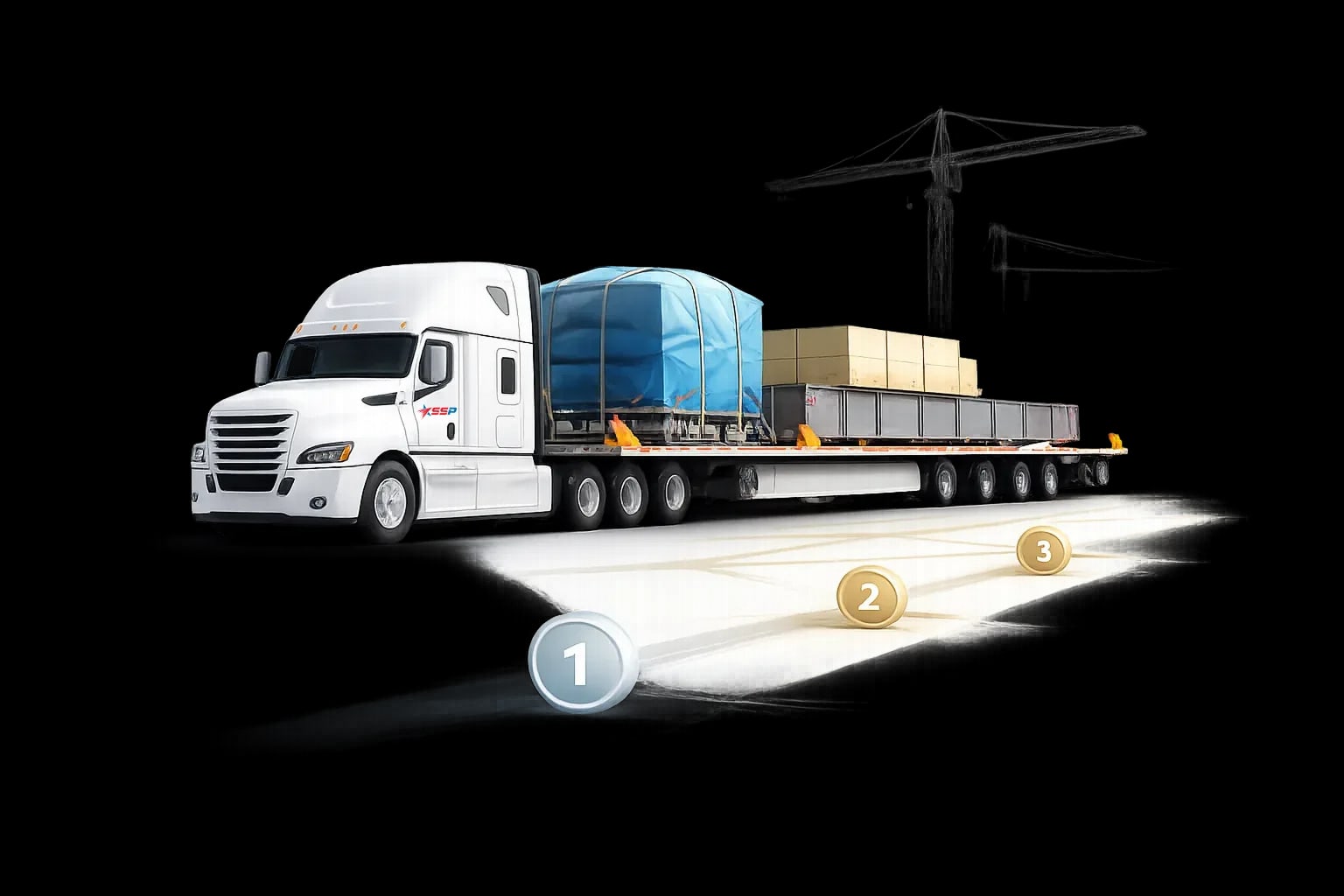
Milestone-driven coordination for phased, engineered, or site-sensitive moves where sequencing, permitting, and multi-carrier orchestration define the project.
Managed Logistics applies when the requirement is a program, not a transaction. Accountability is named, review is recurring, and coordination spans capacity, facilities, and warehousing over the life of the engagement.
Performance, cost, exceptions, and network changes are reviewed on a set schedule — not only when a shipment escalates or a quarterly report is due.
Procurement, operations, site coordination, and escalation have assigned owners so decisions are made by accountable roles, not passed between rotating contacts.
The operating model survives personnel turnover and lane changes because rules, data, and governance stay attached to the program — not to individuals.
Freight movement, warehouse activity, and facility operations are planned as one system so handoffs between transport and storage do not create hidden execution risk.
Performance, cost, exceptions, and network changes are reviewed on a set schedule — not only when a shipment escalates or a quarterly report is due.
Procurement, operations, site coordination, and escalation have assigned owners so decisions are made by accountable roles, not passed between rotating contacts.
The operating model survives personnel turnover and lane changes because rules, data, and governance stay attached to the program — not to individuals.
Freight movement, warehouse activity, and facility operations are planned as one system so handoffs between transport and storage do not create hidden execution risk.
Start the Conversation
Share the network footprint, recurring freight profile, facility requirements, and service expectations. We will structure the managed model — capacity, warehousing, dedicated assets, or project coordination — with the review cadence and accountability the program needs.
Start the Conversation