
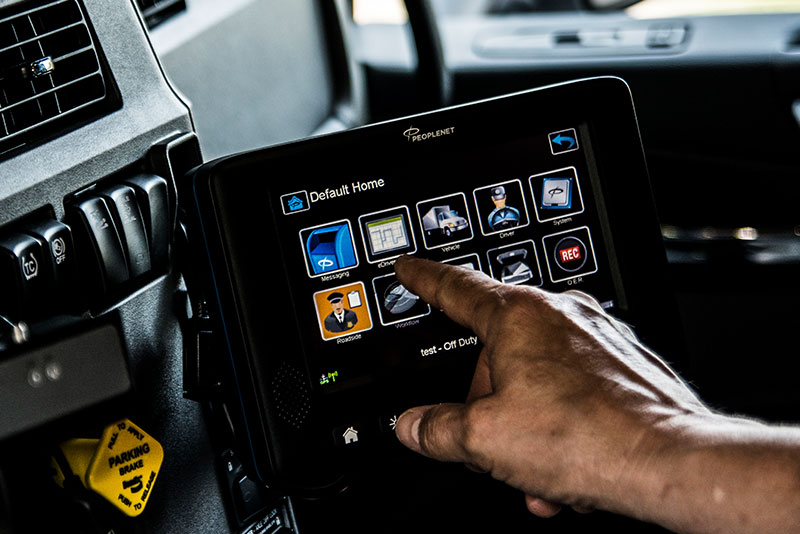
Learn how electronic logging devices help trucking companies and drivers improve compliance, track hours and mileage, monitor vehicle health, and support safer transportation.
As technology continues to advance, the trucking industry is advancing with it. One important example is the use of electronic logging devices, commonly known as ELDs.
Electronic logging devices are connected to truck engines to record driving hours, support compliance, and help fleets manage operations more efficiently. For drivers, dispatchers, and trucking companies, ELDs can make day-to-day transportation easier, safer, and more organized.
In both Canada and the United States, regulations limit how long truck drivers can remain on the road without proper rest. ELDs help drivers and fleet operators track hours of service more accurately and reduce the risk of non-compliance.
What Is an ELD?
An ELD, or electronic logging device, is a digital tool installed in a commercial vehicle to automatically record driving time and related activity.
Instead of relying on paper logs, drivers and carriers can use ELDs to track:
- Driving hours
- On-duty and off-duty time
- Mileage
- Vehicle movement
- Engine activity
- Trip and route information
- Compliance-related records
This makes driver log management more accurate and easier to review.
Why ELDs Matter in Trucking
Driver fatigue is a major safety concern in transportation. Hours-of-service rules are designed to help drivers get proper rest and reduce fatigue-related risks.
ELDs support this by recording work and driving time automatically. They help drivers understand how much time they have available, when rest is required, and whether they are staying within legal limits.
For carriers, ELDs can also make compliance records easier to manage and reduce administrative work.
3 Reasons ELDs Can Make Life Easier
1. ELDs Support Hours-of-Service Compliance
In Canada, commercial drivers are limited by hours-of-service rules that govern driving time, on-duty time, and required rest periods. In the United States, similar rules apply under federal hours-of-service regulations.
ELDs help drivers stay aware of their available driving hours and rest requirements. They can provide alerts, record duty status changes, and make it easier to demonstrate compliance during inspections.
For trucking companies, this reduces paperwork and helps maintain cleaner compliance records.
2. ELDs Help Track Work Hours and Mileage
ELDs can also help drivers and employers track work hours and mileage more accurately.
This is useful because some drivers are paid by the hour, while others may be paid by the mile. Accurate mileage and time tracking creates better visibility for payroll, operations, dispatch planning, and performance review.
Instead of manually recording every trip detail, ELDs automate much of the process. This saves time and reduces errors.
3. ELDs Can Help Monitor Vehicle Health
Some ELD systems can connect with vehicle diagnostics and provide insight into engine condition, fault codes, maintenance needs, or equipment health.
This can help fleets identify issues earlier before they become serious problems. Early detection can reduce breakdowns, prevent delays, and improve safety for the driver, freight, and the public.
Better maintenance visibility can also help trucking companies manage costs by addressing smaller repairs before they become major failures.
How ELDs Improve Driver Experience
ELDs are not only about compliance. They can also improve the driver experience when implemented well.
A good ELD system can connect drivers with trip information, route data, available hours, inspection records, and communication tools through an easy-to-use in-cab or app-based interface.
This helps drivers stay informed and reduces the need for manual paperwork.
How ELDs Help Freight Customers
Although ELDs are mostly used by drivers and carriers, they can indirectly benefit freight customers as well.
When fleets use ELDs properly, they can improve:
- Delivery planning
- Safety practices
- Driver availability visibility
- Route coordination
- Compliance confidence
- Maintenance reliability
- Communication around delays
For customers shipping with a professional carrier, strong compliance and fleet visibility help create a more reliable transportation experience.
ELDs and Modern Logistics
Modern freight movement depends on accurate information. ELDs are part of a broader shift toward more connected logistics systems.
Alongside GPS tracking, dispatch software, digital documents, and fleet maintenance tools, ELDs help trucking companies operate more safely and efficiently.
For companies moving freight across Canada, the United States, and Mexico, strong compliance systems are especially important. Cross-border freight can involve inspections, documentation, and timing requirements that benefit from accurate records and organized operations.
For broader shipment planning, cross-border transportation support can help businesses manage documentation, routing, and delivery coordination.
Conclusion
Electronic logging devices have become an important part of modern trucking. They help drivers track hours, support compliance, reduce paperwork, improve mileage visibility, and in some cases monitor vehicle health.
For drivers, ELDs can make daily work more organized. For trucking companies, they can support safer operations, better records, and more efficient fleet management. For customers, they contribute to more reliable freight movement.
As the trucking industry continues to evolve, ELD technology will remain an important tool for safety, compliance, and operational efficiency.
FAQs
What does ELD mean in trucking?
ELD stands for electronic logging device. It is a digital system used to record driving time, duty status, mileage, and related compliance information.
Why do truck drivers use ELDs?
Truck drivers use ELDs to track driving hours, manage rest periods, reduce paperwork, and comply with hours-of-service regulations.
Can ELDs help improve safety?
Yes. ELDs help reduce fatigue-related risk by supporting hours-of-service compliance and can also provide useful trip or vehicle information.
Do ELDs track mileage?
Yes. ELDs can track mileage and driving activity, which can support payroll, dispatch planning, recordkeeping, and operational visibility.
Can ELDs monitor truck engine health?
Some ELD systems include diagnostic features that can identify engine issues, fault codes, or maintenance needs before they become larger problems.