
Skip to content
cs@sspgroup.com8401 5 Side Rd, Milton, ON L9T 2Y7

Step Deck

Lower-deck step deck capacity for taller open-deck freight.

We moves step deck freight across Canada, the United States, and Mexico for shippers that need open-deck access with lower deck height than a standard flatbed can provide. This is the right equipment path for taller machinery, fabricated units, industrial skids, and freight profiles that must stay legal without moving into a removable-gooseneck or permit-led heavy-haul structure.

Equipment Overview

Step deck dimensions are about height control, not just deck length.

Before a load is booked, the lower-deck profile, overall cargo height, deck length, legal width, and securement requirements should be checked against the actual freight. That is what determines whether step deck keeps the shipment legal and operationally clean.

Length
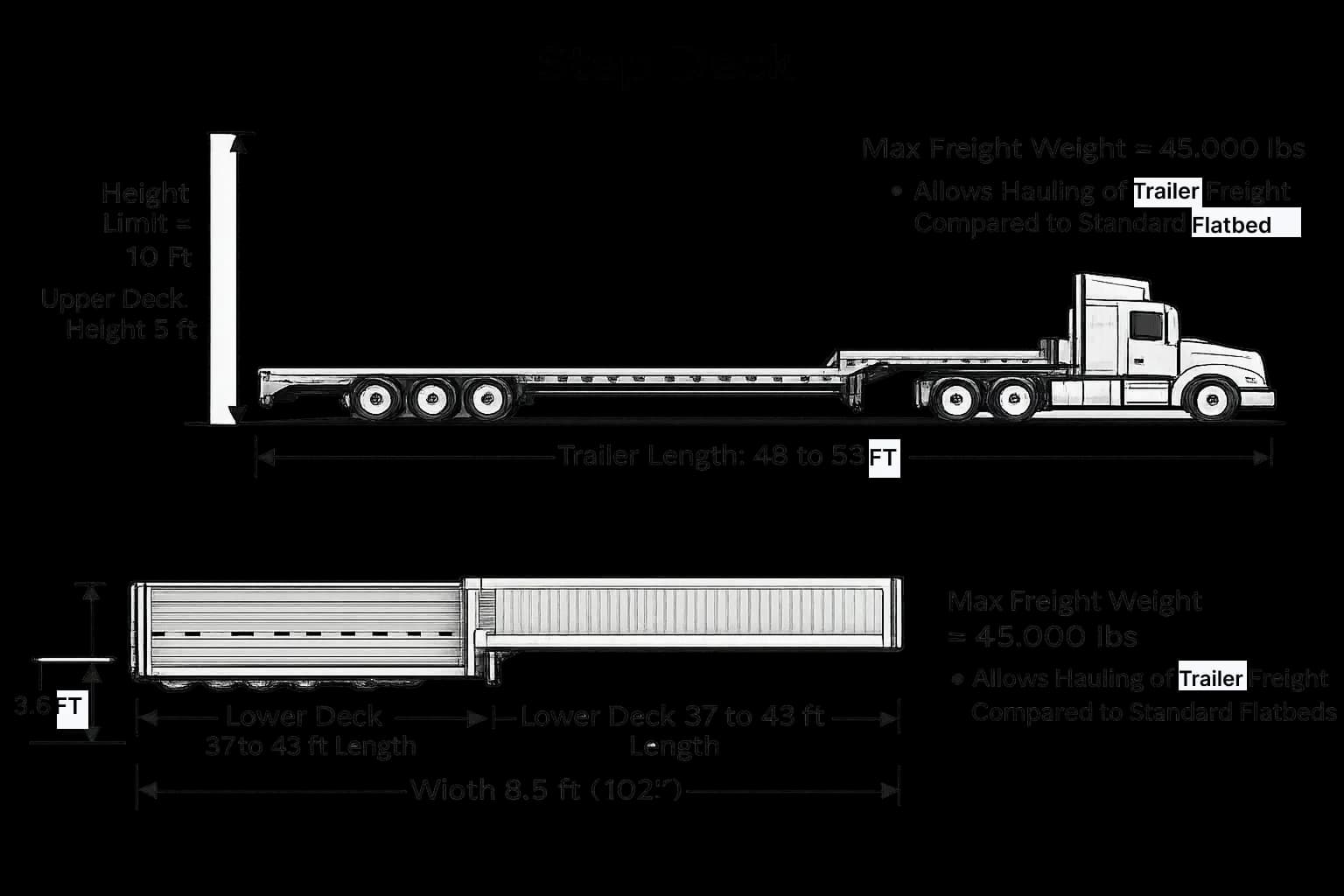
48 ft or 53 ft overall deck with upper and lower deck sections
Width
8.5 ft (102 inches)
Height
Lower deck supports taller legal freight profiles than standard flatbed
Max Freight Weight
~42,000-48,000 lbs typical legal payload depending on configuration and route
Step deck trailer equipment diagram with lower-deck dimensions and payload guidance

For Step Deck

Why SSP

For Step Deck

01

Height-risk qualification happens before capacity is assigned

We review cargo dimensions, lower-deck fit, loading method, route constraints, and securement requirements before step deck capacity is committed, so the operating plan reflects actual height exposure rather than assumption.

02

Site handling and deck geometry are aligned early

Upper-deck transition, loading sequence, forklift or crane access, appointment timing, and unload conditions are structured before pickup so the move does not lose control at the site.

03

Exceptions stay tied to the shipment from pickup through closeout

Route restrictions, weather exposure, delivery-side readiness, detention risk, and any operating changes remain managed responsibilities tied to the load instead of issues discovered after the fact.

Freight Fit Guide

Freight fit should confirm step deck before pricing locks in.

Use this guide to confirm that the shipment needs lower deck height without moving into a more specialized equipment path. If the freight fits a standard flatbed, requires permit-led handling, or needs weather protection, we should route it early.

How It Works

A step deck move should be qualified before dispatch.

Step deck execution improves when cargo height, deck fit, loading method, and route reality are aligned before the trailer is moving. This is the operating sequence we follow.

01

Confirm cargo geometry and lower-deck fit

Commodity, dimensions, weight, center-of-gravity concerns, and loading method are reviewed first so step deck is confirmed before pricing or capacity is assigned.

02

Align route and site constraints

Height exposure, route limitations, securement needs, loading equipment, site access, and unloading sequence are built into the operating plan before dispatch.

03

Dispatch against milestone ownership

Once the move is qualified, we dispatches against pickup, in-transit, and delivery milestones with communication tied to real operating checkpoints and site readiness.

04

Close delivery with documentation and exception discipline

Delivery confirmation, POD closeout, accessorial review, and any route or site-side follow-through stay connected to the shipment so the move finishes cleanly and stays accountable through completion.

Step Deck FAQs

The operating questions that matter before booking step deck.

These are the questions that usually determine whether step deck is the correct equipment path and what we need to structure the move cleanly.

Step deck is best for open-deck freight that is too tall for a standard flatbed to remain comfortably legal but does not require a removable-gooseneck or other heavy-haul structure. Common examples include tall machinery, fabricated equipment, industrial skids, and irregular freight profiles.

Confirm the fit

Confirm step deck fit before the trailer is assigned.

Share the lane, commodity, dimensions, weight, loading method, and timing requirements. We will confirm whether step deck is the right equipment path, flag height or handling risks early, and structure the move for controlled execution.

Confirm the fit