
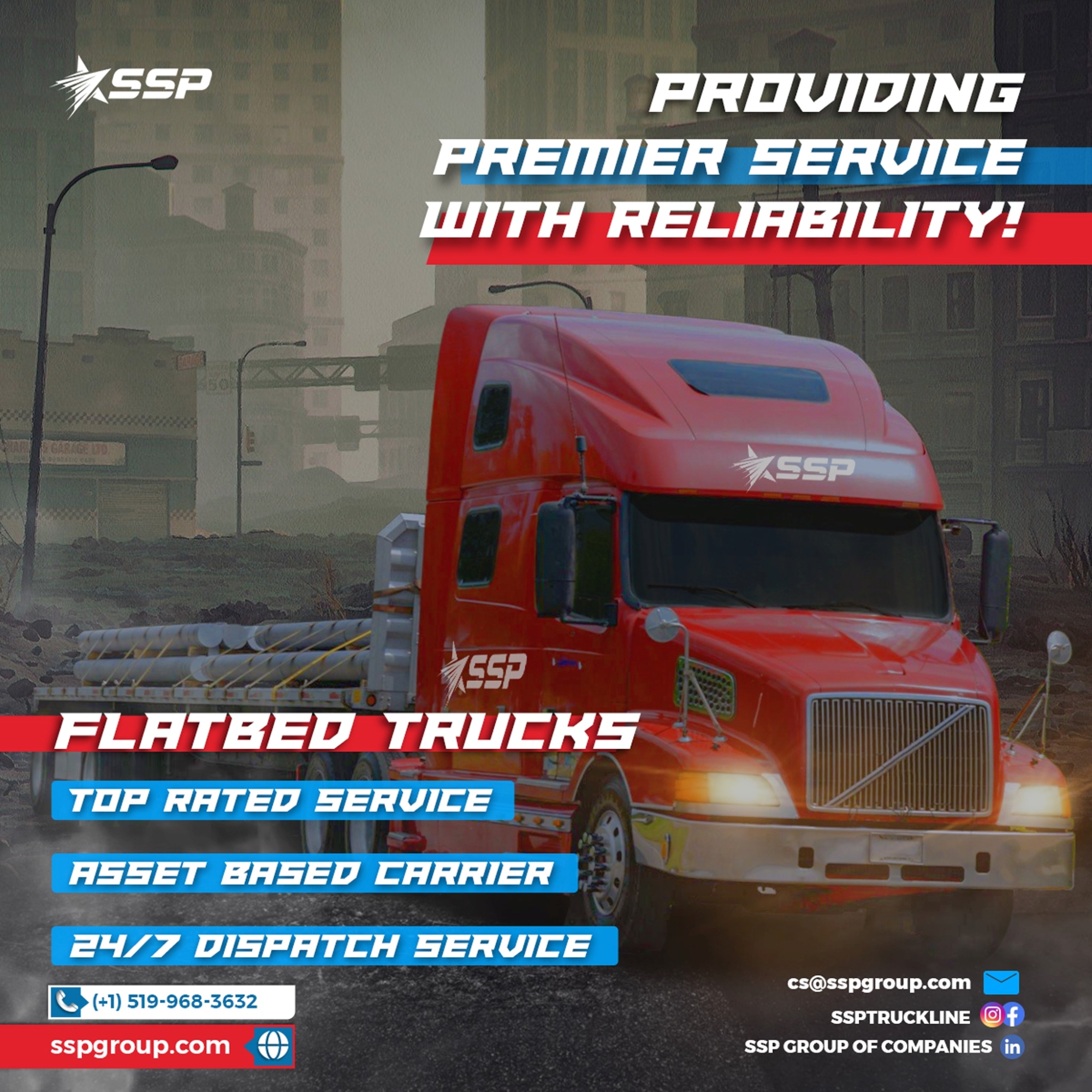
Learn how flatbed trailers support modern logistics through flexible loading, oversized freight capacity, secure cargo handling, expedited shipping, technology, and sustainability.
In logistics and transportation, where precision and reliability are essential, flatbed trailers are vital tools that drive efficiency and success across many industries.
As a transportation and logistics provider, SSP Group recognizes the important role of flatbed trailers in supporting seamless and secure cargo movement across diverse sectors. From oversized machinery to construction materials and irregularly shaped freight, flatbed trailers help move cargo that standard enclosed trailers cannot handle.
Let’s explore the world of flatbed trailers and how they are reshaping modern logistics practices.
The Evolution of Flatbed Trailers: From Origins to Modern Innovations
Flatbed trailers have come a long way from their early use as simple platforms for hauling heavy loads. What began as basic carriers has evolved into sophisticated transportation equipment capable of handling many cargo types efficiently.
Thanks to advancements in design, materials, and technology, flatbed trailers now offer improved flexibility, safety, and efficiency.
Pioneering Origins
Initially, flatbed trailers were little more than wooden platforms attached to wheeled carts, serving as basic carriers for goods and heavy materials.
Innovative Transformations
Over time, innovations such as metal frames, reinforced flooring, stronger securement points, and improved suspension systems changed flatbed trailer design. These improvements enhanced durability, stability, and load-bearing capacity.
Modern Equipment
Today’s flatbed trailers may include advanced features such as lightweight materials, improved deck designs, better tie-down systems, and integrated safety technologies. These improvements make flatbeds a key part of modern freight movement.
Benefits of Flatbed Trailers
Flatbed trailers offer major advantages for businesses that move large, heavy, or unusual cargo.
Safety and Security
With strong tie-down points and securement equipment, flatbed trailers help keep cargo stable throughout the journey. Proper strapping, chaining, blocking, and bracing reduce the risk of shifting, damage, or loss during transit.
For high-value or complex shipments, professional securement planning gives shippers peace of mind and helps protect goods from pickup to delivery.
Flexible Loading and Unloading
Flatbed trailers are known for their open design. Freight can be loaded from the side, rear, or overhead using forklifts, cranes, or loaders.
This flexibility is especially useful for oversized machinery, steel, lumber, pipe, construction materials, and irregularly shaped cargo that cannot be moved easily through enclosed trailer doors.
Fast Solutions for Tight Timelines
Flatbed trailers can support faster loading and unloading when freight requires job-site access or overhead equipment. For time-sensitive freight, flatbed service can also be paired with expedited shipping to help meet demanding deadlines.
Cost Efficiency
Flatbed trailers can be a cost-effective solution for freight that would otherwise require special handling or difficult loading arrangements. By matching cargo to the right trailer, businesses can reduce delays, avoid rework, and improve transportation efficiency.
Easier Maintenance and Operational Simplicity
Compared with more complex trailer types, flatbed trailers can be simpler to maintain and inspect. This supports better equipment availability and helps reduce service disruption.
Versatility Redefined: Where Flatbeds Are Used
Flatbed trailers are not only for construction materials. Their adaptability makes them valuable across many industries.
Common flatbed applications include:
- Construction: steel beams, lumber, scaffolding, pipe, concrete products, and building materials
- Manufacturing: machinery, equipment, fabricated parts, and industrial components
- Agriculture: tractors, combines, implements, and farm equipment
- Automotive: vehicles, parts, frames, and specialized equipment
- Energy and utilities: generators, transformers, poles, and infrastructure materials
- Emergency response: supplies, equipment, and temporary structures
For taller or heavier freight, step deck trailers or RGN and heavy haul transportation may be required depending on cargo dimensions and loading needs.
Flatbed Trucks at the Core of Logistics Operations
Flatbed trucks are essential for companies that need reliable open-deck transportation. A well-maintained flatbed fleet helps support timely and secure deliveries, especially when cargo requires special equipment or careful securement.
Key operational factors include:
- Skilled drivers trained in flatbed securement
- Routine maintenance and inspections
- Proper use of straps, chains, binders, and tarps
- Real-time communication and shipment visibility
- Coordination with loading and unloading teams
Together, these practices help ensure flatbed freight is moved safely and professionally.
Professionalism and Precision in Service Delivery
Flatbed shipping requires planning and attention to detail. Cargo dimensions, weight, route restrictions, loading equipment, securement needs, and delivery-site access all matter.
A professional logistics team helps manage:
- Equipment selection
- Securement planning
- Pickup and delivery scheduling
- Route review
- Oversize permit coordination when required
- Communication throughout transit
For businesses moving freight across Canada, the United States, or Mexico, cross-border transportation planning may also be important.
Technology and Flatbed Trailer Efficiency
Technology continues to improve flatbed logistics. Modern tools help transportation providers plan routes, monitor shipments, and reduce risks.
Useful technologies may include:
- Real-time tracking systems
- Digital dispatch tools
- Load monitoring sensors
- Predictive maintenance systems
- Route optimization platforms
- Transportation management systems
These tools help increase visibility, improve safety, reduce delays, and support better decision-making.
Sustainability in Flatbed Transportation
Flatbed trailers can support more efficient freight movement when used correctly. Better load planning, route optimization, reduced empty miles, and fuel-efficient equipment can help lower environmental impact.
Sustainable flatbed practices may include:
- Consolidating compatible loads when possible
- Planning efficient routes
- Reducing unnecessary mileage
- Maintaining equipment for fuel efficiency
- Improving trailer utilization
As sustainability becomes more important in logistics, these practices help businesses move freight more responsibly.
Future Trends in Flatbed Trailer Technology
Flatbed transportation will continue to evolve as logistics technology advances.
Important future trends include:
- Lighter trailer materials that improve payload efficiency
- Smarter sensors for load monitoring and maintenance
- Better route and fleet optimization tools
- Greater use of digital documentation
- Improved safety technologies
- Cleaner fleet and equipment strategies
Companies that adopt practical innovations will be better positioned to improve service, control costs, and support safer freight movement.
Conclusion
Flatbed trailers are a backbone of modern logistics, supporting the movement of goods that require open-deck access, flexible loading, securement, and specialized planning.
From early platform-style carriers to today’s advanced equipment, flatbed trailers have evolved to support safety, efficiency, and versatility across industries.
By using flatbed trailers effectively, businesses can move oversized, heavy, and irregular cargo with confidence. SSP Group supports flatbed freight with a focus on safety, reliable communication, equipment planning, and professional execution.
For flatbed, expedited, or specialized shipping needs, SSP Group can help your business move freight efficiently and securely.
FAQs
What is a flatbed trailer?
A flatbed trailer is an open-deck trailer with no sides or roof, designed to carry freight that may be oversized, heavy, irregularly shaped, or difficult to load into enclosed trailers.
What are flatbed trailers used for?
Flatbed trailers are commonly used for construction materials, steel, lumber, machinery, agricultural equipment, industrial freight, and oversized cargo.
Why are flatbed trailers important in logistics?
Flatbed trailers provide flexible loading, strong cargo securement, and the ability to transport freight that does not fit in dry vans or enclosed trailers.
Can flatbed trailers carry oversized freight?
Yes. Flatbed trailers are often used for oversized freight, though loads exceeding legal height, width, length, or weight limits may require permits and route planning.
Does SSP Group provide flatbed transportation?
Yes. SSP Group supports flatbed transportation, oversized freight planning, and specialized logistics solutions across North America.