
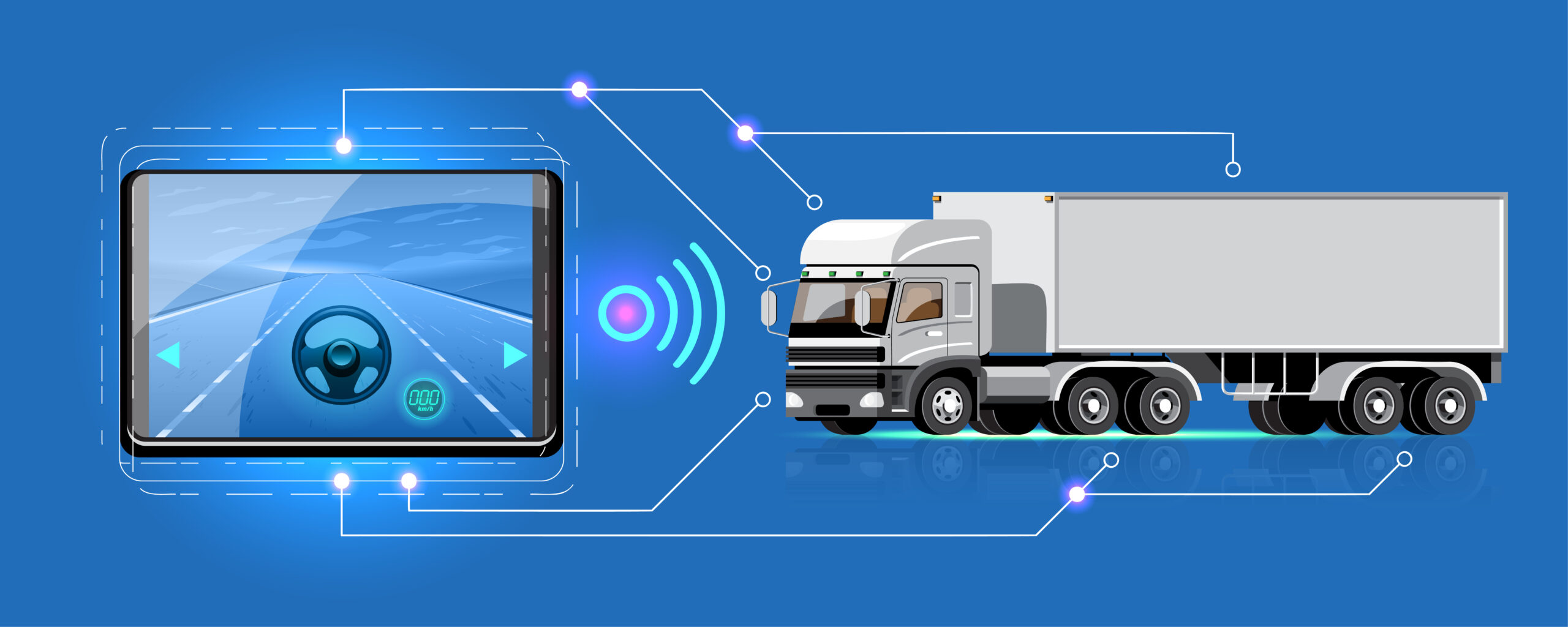
Explore the rise of autonomous trucks, what is already working, how autonomous trucking may affect drivers and logistics companies, and what could come next for Canada’s trucking industry.
You used to hear them before you saw them.
That deep diesel hum, the hiss of brakes, and the long shadow of a truck rolling down a quiet highway. There was always someone behind the wheel, maybe sipping lukewarm coffee, maybe halfway through a long-haul playlist, maybe just watching the road blur by.
Now, things are different.
Autonomous trucking is one of those terms that sounds like science fiction, but if you’ve been paying attention, it’s already moving into the real world slowly, quietly, and steadily.
You won’t always notice it unless you’re in the industry. But trucks that steer themselves, haul loads across long distances, and report back without needing a driver are real, and they’re growing.
The big question isn’t “is it happening?” It’s “what does it mean for the rest of us?”
Let’s talk about it.
Autonomous Trucking in Canada
Autonomous trucking in Canada is quietly gaining traction, especially in provinces with long-distance haul routes and open highways. While the pace is slower than in the U.S., Canada’s logistics sector is actively exploring automation in regions such as Alberta and Ontario, where industries like mining, agriculture, and oil rely heavily on freight transportation.
With government interest growing and pilot programs on the rise, Canada is not just watching the shift. It is getting ready to be part of it.
The State of Autonomous Trucking
First off, what are we actually talking about?
Autonomous trucks, or autonomous vehicle trucks, are large rigs equipped with advanced systems: cameras, radar, LiDAR, GPS, machine learning, and other technologies that help a computer understand where it is, where it’s going, and what’s in the way.
We’ve seen smaller autonomous vehicles for years now, including cars, delivery robots, and warehouse carts. But trucks are a different game.
Currently, most autonomous trucks are somewhere between the testing phase and limited deployment. They’re running on controlled routes, such as desert highways in Arizona rather than downtown Toronto during rush hour.
In Canada, the movement is slower, but not behind. There is interest, especially in wide industrial regions where the roads are long and traffic is predictable. Autonomous trucking in Canada may not be as headline-grabbing as what’s happening in the U.S., but the groundwork is there through pilots, partnerships, and investment.
In specific sectors, such as mining, autonomous haul trucks are already operating without anyone inside. Massive machines move literal tons, guided by code and sensors.
That is not the future. That is now.
What’s Actually Working Right Now
Let’s not get too dreamy here.
Autonomous trucking sounds impressive, but like all technology, it is still finding its feet. So what is actually working?
Quite a bit, in the right environments.
Trucks are doing regular, predictable routes between warehouses and hubs. Think of long highway runs where the road is smooth and the variables are fewer.
Autonomous haul trucks in mining operations are probably the best example. These rigs don’t need to worry about traffic lights or pedestrians. They just go from point A to point B on repeat, all day long, with no breaks and no fatigue.
Then there is the data. These trucks collect and share constant feedback, which is valuable for logistics planning, safety analysis, and route optimization.
It is not perfect. But it is not a gimmick either.
This isn’t about fully replacing humans. Not yet, and maybe not ever. It is about automating what can be automated: the long stretches, the repetitive paths, and the places where human error could cost lives or money.
Everyday Impact: The People Behind the Wheel, or Not
What does this actually mean for drivers, companies, or anyone who has worked a shipping dock?
For drivers, it’s a mixed picture. Some worry about losing work, and that concern is understandable. But there is another side to it: driving work may shift.
Instead of being on the road for 16 hours straight, drivers may become supervisors, managing fleets from behind screens and stepping in when human input is needed. Think pilot with autopilot, not pilotless plane.
For trucking companies, this opens new options:
- Fewer delays
- Fewer accidents
- 24/7 operations
- More consistent performance
- Less fuel waste
- Better route optimization
- Lower insurance risk over time
For supply chains, this is a major shift. Less disruption. Fewer “your order is delayed” emails. When trucks can operate day and night while humans rest, the entire system can become more efficient.
And companies focused on advanced logistics, digital planning, and reliable transportation networks will be part of making this transition practical. SSP Group supports modern freight movement through solutions like truckload shipping, cross-border freight, and dedicated contract transportation, where route planning and visibility already play a major role.
What’s Slowing It All Down?
Before we all start replacing our trucker hats with tablets, let’s pump the brakes.
There are real reasons why autonomous trucking is not everywhere yet.
Regulations
You cannot just put a robot truck on the road and hope for the best. Laws are catching up, but slowly. Canada is still building the legal frameworks needed for broader autonomous trucking deployment.
Weather
Ever driven through a Canadian snowstorm? Now imagine doing that without human eyes. Winter roads, ice, fog, and rapidly changing conditions are still major challenges for AI.
Trust
People are still uneasy about vehicles with no drivers. Some are curious. Some are skeptical. Some are uncomfortable. That matters.
Money
Transitioning fleets is expensive. Not every company can afford to invest in advanced trucking technology yet. While costs are expected to decrease over time, they remain a barrier today.
So yes, it’s not full speed ahead. But the engine is running.
What’s Next for Autonomous Trucking?
Looking ahead, things are only going to get more interesting.
We’ll likely see mixed fleets, part autonomous and part human-driven, working together. That is where most companies will start. A few autonomous rigs may handle the bulk work, while drivers take care of complex or urban routes.
In Canada, 2025–2028 could be an important stretch. Provinces may start allowing more testing on public roads, and pilot programs could expand in areas like Alberta and Saskatchewan, where roads are more forgiving and industries like oil, gas, and agriculture are open to automation.
Urban applications are still farther off. Downtown Toronto is complex on a good day. But rural highways, mid-distance hauls, and closed-loop industrial routes are much more realistic.
Autonomous trucking in Canada is on the move: not flashy, not dramatic every week, but steady, thoughtful, and real.
This Isn’t Just a Trucking Thing: It’s a Tech Shift
Here’s something people often miss: this is not just about trucks.
It is about how every industry is changing. Logistics. Technology. Infrastructure. Even education and training.
As autonomous vehicle trucks become more common, the industry will need:
- Mechanics who can work with sensors
- Drivers who can manage software
- Dispatchers who understand machine logs
- Logistics teams that can interpret data
- Safety teams that can plan around new systems
It’s less about jobs disappearing and more about jobs shifting.
Culturally, it’s a shift too. We’re used to trucks being this rugged, human, gritty part of the world. Replacing that with sensors and automated decisions feels strange. But it is happening, not to erase what came before, but to evolve with it.
Real innovation does not always feel exciting. Sometimes, it feels awkward and slow until one day, it becomes normal.
Final Thoughts: Not Science Fiction, Just the Next Chapter
So, where does that leave us?
We are not living in a robot future just yet. There is still a driver in most trucks. Still someone waving from the cab. Still fuel stops, highway diners, and stories from the road.
But around the edges, it is changing.
A few routes are now running themselves. A few fleets are testing full autonomy. Companies are making plans not for if this happens, but for when.
The rise of autonomous trucks is not about getting rid of people. It is about building smarter systems, safer roads, and more efficient supply chains. It is about giving a tired industry a new rhythm.
Whether you’re in logistics, technology, or simply someone who has always respected the hum of a truck on the road, keep watching. The next few years are going to be a ride.
FAQs
What are autonomous trucks exactly?
Autonomous trucks are large commercial vehicles that use AI, sensors, cameras, radar, LiDAR, GPS, and software systems to drive or assist with driving tasks.
Where is autonomous trucking already happening?
Autonomous trucking is already happening in mining, depot routes, controlled test zones, and limited highway pilots, especially in the U.S. and some parts of Canada.
Will drivers lose jobs?
Not entirely. Many roles may shift from long-haul driving to monitoring, managing, maintaining, or supervising automated systems.
What is stopping full adoption right now?
Legal hurdles, bad weather, high costs, public trust, insurance questions, and infrastructure readiness are all slowing full adoption.
Who is helping shape this shift?
Technology innovators, logistics companies, transportation providers, regulators, manufacturers, and supply chain leaders are all helping shape the future of autonomous trucking.