
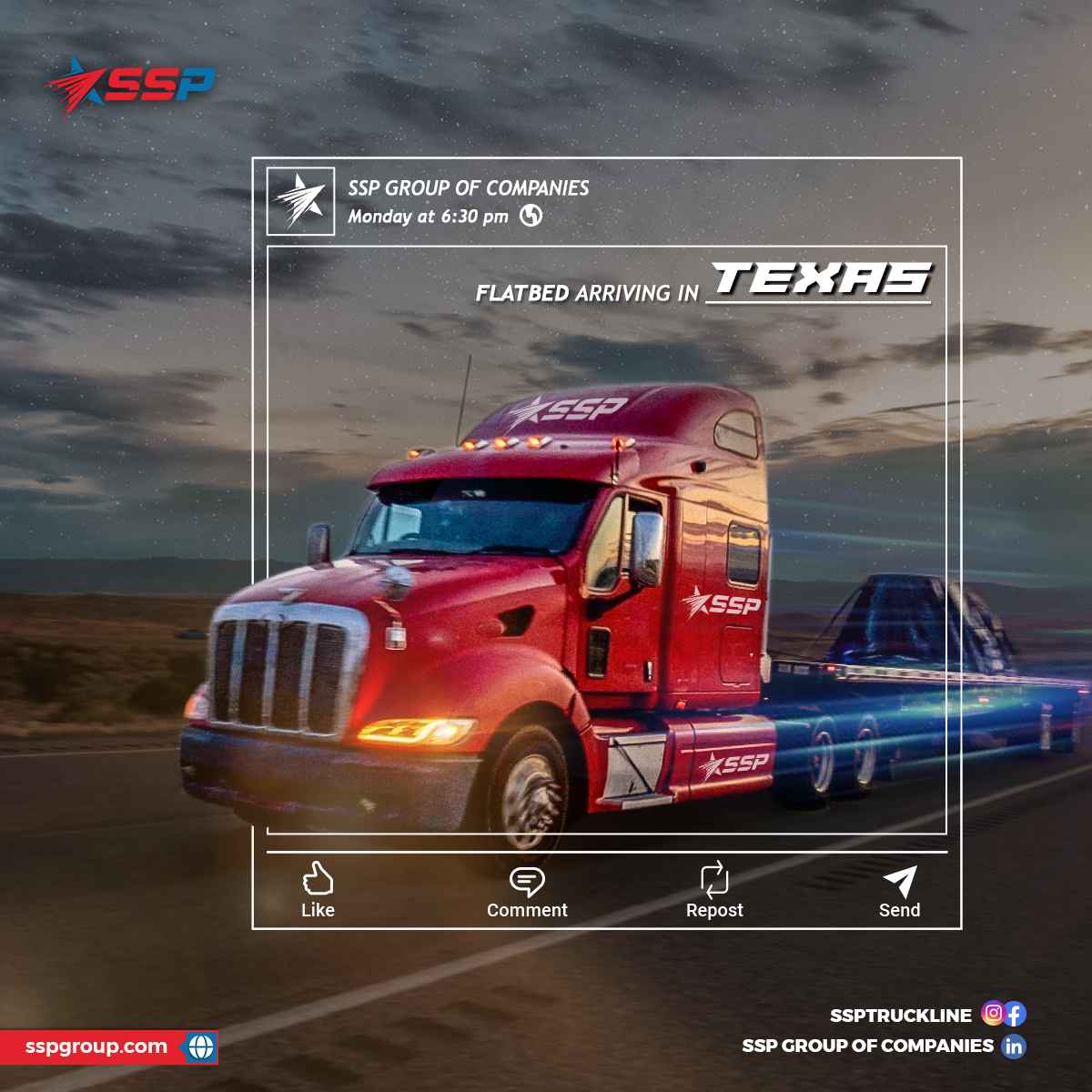
Learn how SSP supports flatbed trucking across Canada, the USA, and Mexico with safe securement, modern equipment, cross-border expertise, technology, and customer-focused planning.
Flatbed trucking has been a crucial part of the transportation and logistics sector for years. Unlike traditional enclosed trucks or containers, flatbeds provide an open platform, making them ideal for transporting large, oversized, or irregular items.
Their lack of roofs or sides allows them to accommodate cargo that would not fit into standard vehicles. For businesses moving machinery, construction materials, steel, equipment, or oversized freight across North America, flatbed transportation offers the flexibility needed to keep complex cargo moving.
Origins and Evolution of the Flatbed
The flatbed truck traces back to the early days of automotive transport. As industries grew and the need for transporting varied goods increased, flatbeds evolved from simple open platforms into specialized transportation equipment.
Modern flatbeds are equipped with stronger decks, improved securement points, advanced tie-down systems, and better trailer designs. These improvements help support safety during transportation and make flatbeds indispensable for sectors such as construction, manufacturing, agriculture, energy, and infrastructure.
The Rise of Flatbed Trucking
The logistics industry changed significantly with the rise of flatbed trucking. Originally used to move oversized goods, flatbeds quickly became a preferred option for cargo that needed flexible loading and open-deck access.
A flatbed truck, free from confining walls, became a practical solution for transporting large machinery, building materials, steel beams, pipe, farm equipment, and other voluminous items.
This design promotes flexibility, allowing freight of different shapes and sizes to be transported across long distances.
Why Flatbed Trucks?
The freight transportation world offers many trailer options, but flatbed trucks have created a strong niche because of their versatility.
Ease of Loading and Unloading
Flatbeds can be loaded from the side, rear, or overhead. This allows cranes, forklifts, loaders, and other equipment to load cargo efficiently from multiple angles.
For industries working on tight schedules, this flexibility can save time and reduce handling challenges.
Ability to Move Varied Cargo
From giant construction beams to heavy machinery, flatbeds can handle a wide range of cargo. They provide flexibility in an industry where freight requirements are often highly specific.
When freight is too tall, wide, long, or irregular for enclosed trailers, flatbed transportation is often the right choice.
For especially tall or heavy freight, step deck or RGN and heavy haul transportation may also be needed.
SSP’s Mark in Flatbed Transportation
In the competitive world of flatbed transportation, SSP Group stands out through safety, planning, communication, and cross-border capability.
Safety-First Approach
Safety is a cornerstone of SSP’s flatbed operations. Transporting large or irregular cargo requires strong securement and careful planning.
SSP supports safe freight movement through:
- Proper trailer selection
- Chains, straps, binders, and other securement tools
- Load planning based on cargo dimensions and weight
- Equipment inspection and maintenance
- Clear communication with drivers and customers
- Attention to route and delivery-site requirements
These practices help reduce risk and support safer flatbed freight movement.
Personalized Customer Solutions
Every customer is unique, and every flatbed shipment has its own requirements. SSP helps create tailored transportation solutions based on cargo size, weight, loading needs, route, timeline, and destination.
This personalized approach helps anticipate challenges and improve delivery reliability.
Expansive North American Network
From Canada to the United States and Mexico, SSP supports freight across key North American lanes. This network helps businesses move flatbed freight across domestic and cross-border routes with greater confidence.
For international lanes, cross-border transportation support can help reduce delays related to routing, documentation, and border coordination.
Technology Behind Flatbed Trucking
Flatbed trucking is not only about moving physical cargo. It also depends on the technology and systems that support visibility, planning, communication, and safety.
SSP continues to use practical technology to improve the transportation experience.
Advanced Fleet Monitoring Systems
Modern fleet monitoring and GPS tools help provide shipment visibility, route awareness, and operational control.
These tools can support:
- Real-time updates
- Better route planning
- Improved response to delays
- More accurate delivery expectations
- Stronger fleet efficiency
Modernized Flatbed Design
Flatbed design has evolved to include stronger materials, improved tie-down points, lighter components, and better safety features.
These improvements allow flatbeds to handle demanding freight while supporting safe and efficient transportation.
Driver Communication Systems
Communication is essential in freight transportation. SSP equips drivers and logistics teams with communication tools that help support real-time decisions, better updates, and faster problem-solving.
This is especially important for time-sensitive or cross-border flatbed shipments.
Training and Expertise: The Backbone of SSP’s Success
Behind every successful flatbed delivery is a trained team.
Driver Training
Flatbed drivers must understand securement, weight distribution, inspection practices, route conditions, safety expectations, and cargo handling requirements.
SSP’s driver training supports professional handling across different types of flatbed freight, from oversized construction materials to machinery and industrial cargo.
Logistics and Support Team
Drivers are supported by logistics professionals who help plan routes, coordinate shipments, manage customer communication, and address issues before they become major problems.
For cross-border freight, this support may include coordination around customs timing, documentation, and delivery expectations.
Challenges in Cross-Border Flatbed Trucking
Moving flatbed freight across Canada, the USA, and Mexico can be complex. Each region may involve different road conditions, regulations, documentation needs, and logistical considerations.
Regulatory Challenges
Different countries, provinces, and states can have different requirements for freight movement, especially when cargo is oversized or overweight.
Staying compliant is essential to avoid fines, delays, or rejected shipments.
Environmental and Route Challenges
Flatbed freight may travel through snow, heat, rain, mountain routes, city corridors, industrial sites, and rural areas. Each condition can affect transportation planning and cargo protection.
Depending on the cargo, tarping, route review, or specialized equipment may be needed.
Regional and Operational Nuances
Cross-border trucking requires awareness of regional holidays, facility hours, border conditions, appointment windows, and local delivery requirements.
A logistics team with North American experience can help businesses avoid avoidable delays.
Why Choose SSP for Cross-Border Flatbed Trucking?
SSP Group helps businesses move complex flatbed freight across North America through a combination of equipment, planning, communication, and service reliability.
Businesses choose SSP for:
- Flatbed and specialized equipment options
- Experience with oversized and irregular freight
- Cross-border freight support across Canada, the USA, and Mexico
- Safety-focused securement practices
- Shipment visibility and communication
- Customer-specific planning
- Practical logistics support from pickup to delivery
For urgent flatbed needs, expedited freight may also support faster delivery timelines.
Conclusion
Flatbed trucking is both practical and specialized. It requires the right equipment, trained drivers, securement knowledge, route planning, and strong communication.
SSP Group combines logistics expertise, technology, safety practices, and North American coverage to support dependable flatbed trucking across Canada, the USA, and Mexico.
As freight demands continue to evolve, SSP remains positioned to help businesses move oversized, heavy, irregular, and specialized cargo with confidence.
FAQs
What is flatbed trucking?
Flatbed trucking uses open-deck trailers with no sides or roof to move oversized, heavy, irregular, or difficult-to-load freight.
What types of freight are best for flatbed trucks?
Flatbeds are commonly used for machinery, construction materials, steel, pipe, lumber, farm equipment, industrial cargo, and oversized freight.
Can flatbed freight move across borders?
Yes. Flatbed freight can move across Canada, the United States, and Mexico with the right equipment, documentation, route planning, and cross-border coordination.
Why is securement important in flatbed trucking?
Securement prevents cargo from shifting during transit and helps protect the freight, driver, road users, and equipment.
Does SSP Group offer flatbed trucking services?
Yes. SSP Group supports flatbed trucking, cross-border freight, oversized cargo, step deck, RGN, heavy haul, and specialized transportation across North America.